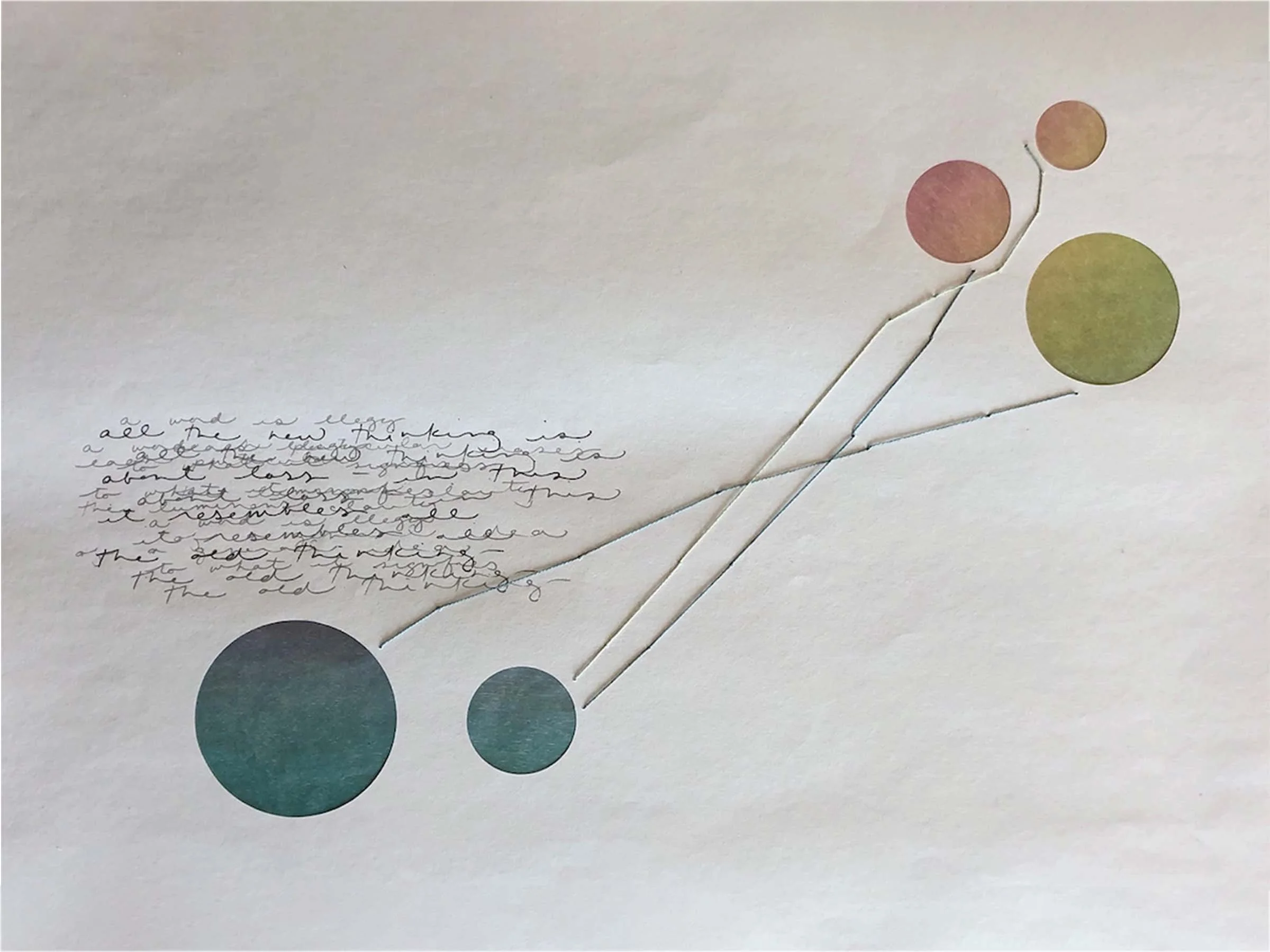
Standing on the edge of Lake MacBride, I hear the ice sing. It’s one of the first early warm days in March and the ice begins to crack; a pinging sound vibrates out over the surface of the lake. It has something to do with science and everything to do with art. I don’t mean simply: the world astonishes and we respond, though that, too. I mean: the what-is cracks and sings and sends its voice out to explore the what-might-be. We leap from idea to form and hope that what becomes visible, physical, is enough to communicate.
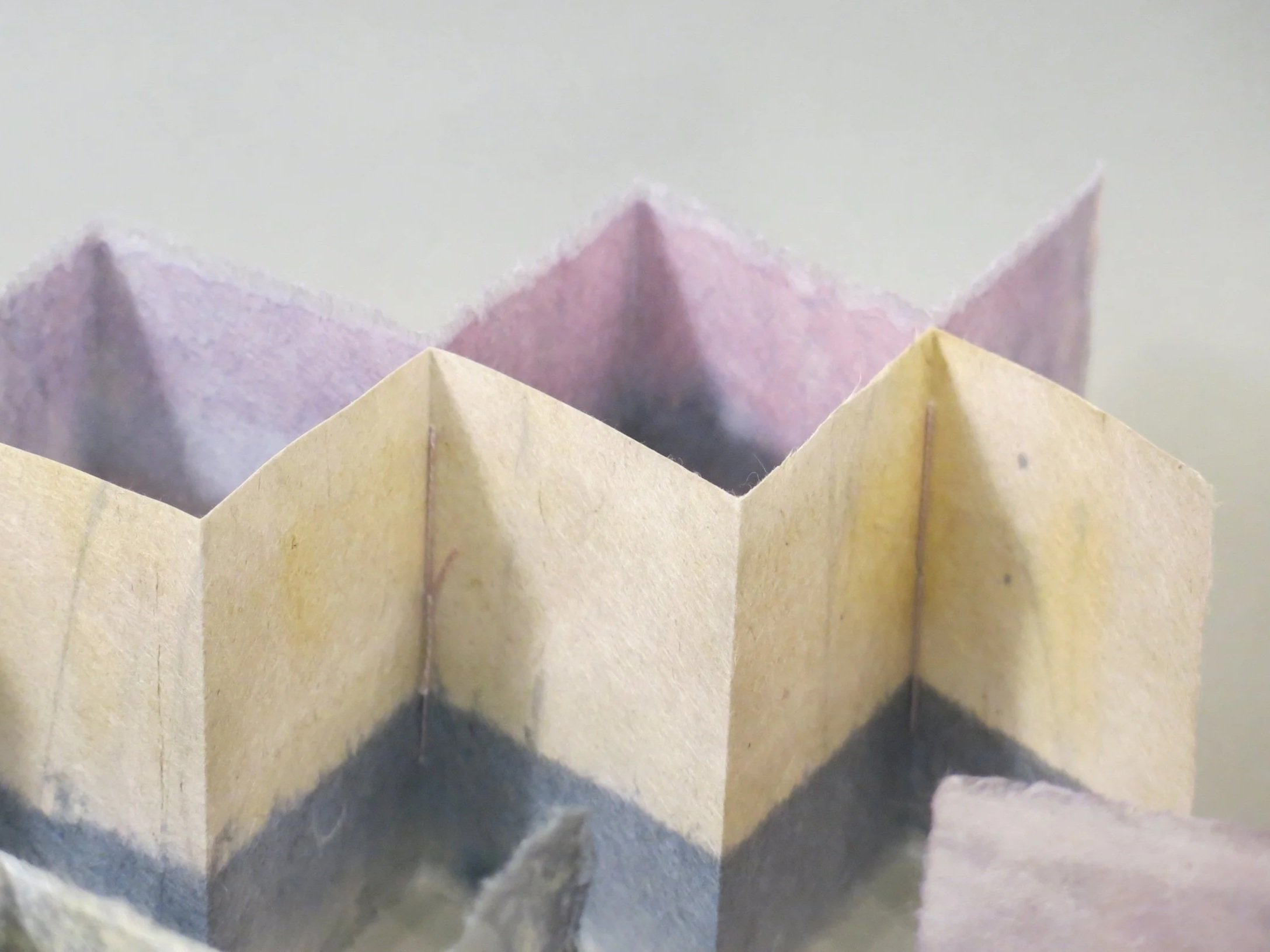
As anyone who has peered over the precipice of one of Dickinson’s dashes, or has lingered over delicate serifs, the striving ascenders and descender of an italic if knows, through language and its accoutrements, all the world is held at the edge of a single stroke; and, what we have as tools are the best approximations we can craft for translating thought to word, idea to form: the book being paramount in our efforts. Built from the smallest elements of language, of layering, mark-making, handwriting and handwork, my work aims to enact an idea articulated by Robert Bringhurst, namely, “a book…is a branching, leafing, flowering structure, unfolding in the mind, where it can find the space it needs….The design of books has meaning because it gives visible form to those invisible realities.”
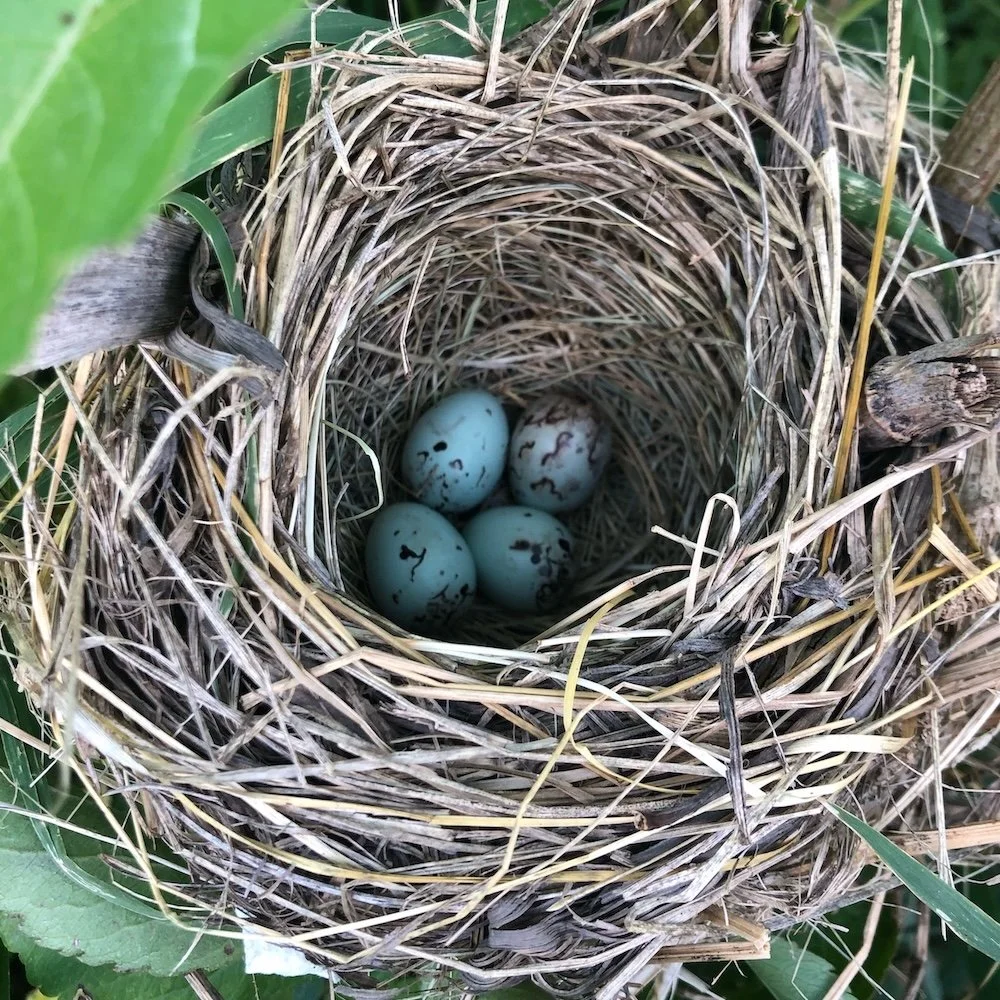
Out for a walk with my beloved and my dog, outlining the teardrop shape of tiny Scott Church Park, we pay attention to the edges, the hidden, the invisible-to-us as the dog pulls us along some scent-path. The wind is swift and swirls the forbs—the black-eyed susans, bergamot, elderberry, and tall grass—but in the movement we see a nest and four eggs, brown speckled over blue. But that’s not quite right—they aren’t speckled, the marks are squiggled and layered like a watercolor. At the edge of the replanted prairie grass patch, we try to imagine what it was like before. The land itself a map to history: there was a church here, a gas station, a hunting ground, a prairie, ice, pine forest. We ebb into and out of. We warm and remember. We revise ourselves at home and go back into the world again.
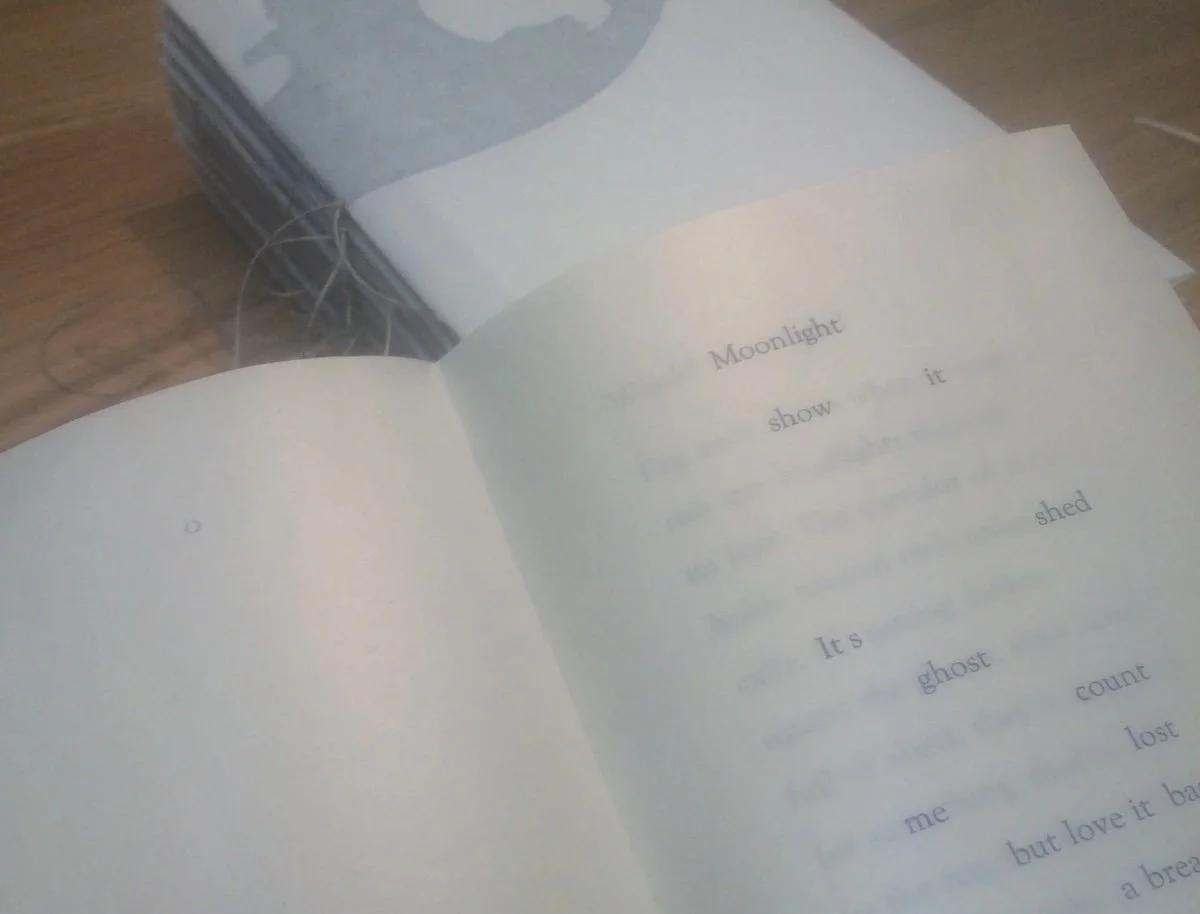
The printer’s loupe is my favorite tool—mine given to me when I was just in elementary school by my uncle who was a printer. The loupe allows me to bring a small thing closer; it is through attention to the small, the details, we are able to see, experience something larger. A shift takes place. After the protest, the words reverberate in my head as pure pattern. I think of Gertrude Stein’s idea that essence of expression is insistence. We must insist now. As I show up for my students to insist on their behalf. As a teacher, I aim to support my students as they translate their lives, their ideas, their visions into writing, into form, into books. This requires—on both our parts—patience, trust, experimentation. Sometimes we falter. Sometimes flutter. We understand why this creative pursuit is called work. bell hooks reminds, “Critical thinking is powerful because it interrupts comfort. It asks why things are the way they are.” Of course, any observation, any thought, may be transformative. Everything is worthy of our consideration. My insistence on this—that art-making itself is an act of utmost importance—is essential to my teaching, and it’s my way of caring, of taking care, for as hooks notes, “The moment we choose to love we begin to move towards freedom, to act in ways that liberate ourselves and others.”
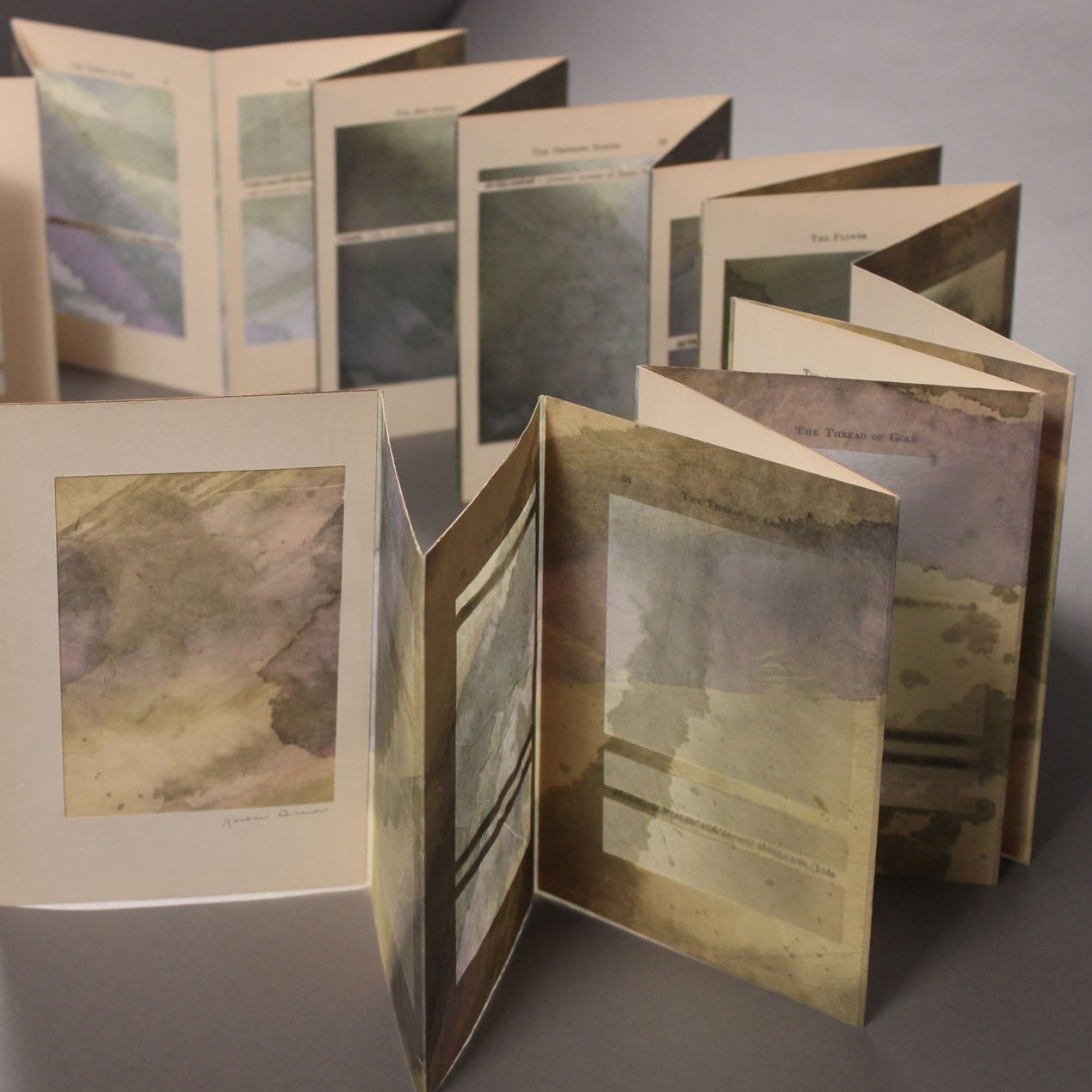
My approach often works with the leap from idea to structure, but the counter leap—from form to idea—is essential as well. Perhaps that’s a more accurate way to look at things from a reader’s point of view. As Gary Frost writes, “Exchanging ideas is not the point. The challenge is to exchange ideas in a graceful structure.” As we know, things do not end with publication, with exhibition, with handing the work to a reader. The reader, too, takes part, takes place. Form hopes to highlight the idea that reading is a way into the world, a way to re-vision the world.